


Multi-Channel Analysis · Advanced · Online self-study
Multi-Channel Analysis of Surface Waves: Advanced
Since its first introduction in the late 1990s, the multichannel analysis of surface waves (MASW) method has been utilized by an increasing number of practitioners for a growing array of geotechnical projects, and further researched by many investigators worldwide. The MASW method provides one of the most critically important geotechnical parameters-stiffness of ground materials. It provides this information in terms of seismic shear-wave velocity (Vs) distribution in both vertical and horizontal directions. From an elastic theory viewpoint, shear wave velocity (Vs) is the most powerful indicator of a material's stiffness.
This course covers the basics of seismic surface waves, data acquisition, data processing and the fundamentals in such a way that participants can, upon its completion, engage in common applications such as seismic site characterization (Vs-30m) and mapping soil/bedrock shear-wave velocity (Vs) cross sections. It will demonstrate how to process surface-wave data, and each participant will be guided step-by-step in processing actual field data sets.
All geotechnical engineers and researchers dealing with stiffness of ground and pavement can benefit from attending this course and learning about this state-of-the-art seismic technique.
The Primary Objectives of the course are:
- To grasp basic concepts of seismic surface waves,
- To understand the overall field procedure for optimal data acquisition,
- To provide first-hand experience in processing field data sets to generate two-dimensional (2-D) shear-wave velocity (V) cross sections as well as 1-D profiles
- To recognize typical applications of MASW, and
- To be fully flexible in data acquisition and processing so that one can handle challenging situations more successfully.
Course at a glance
Sessions
8
Video
4.5 hrs
Duration
3 months
Languages
English
Outcomes
What you'll learn
Data Acquisition
- How to determine the critical parameters of source offset (X1), receiver spacing (dx), number of channels, and survey interval for 2-D mapping
- How to choose the optimum receiver
- Are low-frequency phones (e.g., 4.5 Hz) really critical?
- Can higher-frequency phones (e.g., 14-Hz, 40-Hz, etc.) be used?
- How to choose the optimum source
- Sledge hammer (10-lb, 20-lb, etc.) or weight-drop?
Passive Survey- When and how?
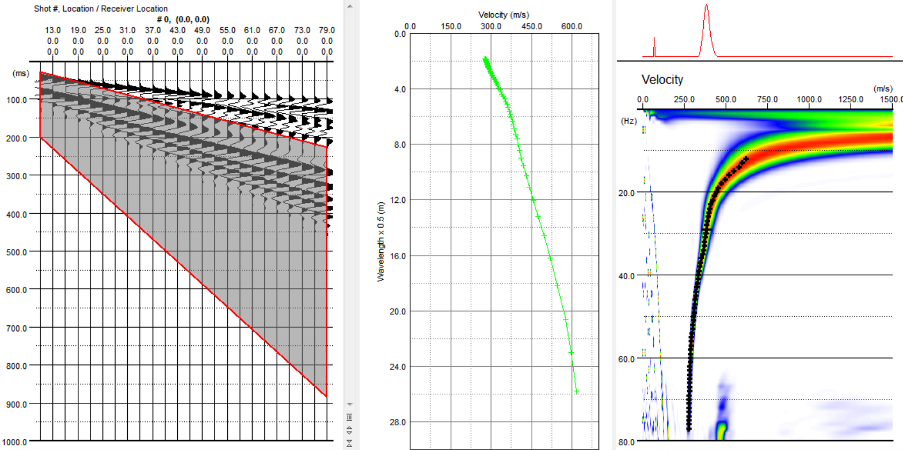
- Dispersion Imaging (Complications and Causes)
- Understanding fundamentals of dispersion imaging
- Fundamental mode (M0) and higher modes (M1, M2, etc.)
- Computational artifacts from dispersion imaging
- Multi-source offset survey and dispersion images
- Methods to process passive data
- Common pitfalls
Inversion Analysis
- Different Approaches (Pros and Cons):
- Traditional fundamental-mode (M0) inversion
- Multi-mode inversion (M0, M1, M2, etc.)
- Inversion Results- What they represent
- Inversion Results- What to believe and what not to believe
- Common Pitfalls
Above is a tentative list of topics to be covered. More topics will be added as per requirement of attending participants.
Curriculum
8 Modules · 8 Lectures
Common questions